









In today’s digital world, URL Encoder and Decoder SpellMistake play a vital role in connecting websites, applications, APIs, and online services. Whether you’re a web developer, digital marketer, SEO professional, or everyday internet user, you’ve probably encountered URLs containing strange symbols like %20, %3A, or %2F. These encoded characters are essential for ensuring URLs are transmitted correctly across browsers and servers.
A URL Encoder and Decoder SpellMistake tool makes this process effortless by allowing users to instantly convert normal text into URL-safe format and decode encoded URLs back into readable text. Best of all, modern online tools complete these tasks in seconds without requiring any technical expertise.
Quick Info
| Field | Information |
|---|---|
| Tool Name | URL Encoder and Decoder SpellMistake |
| Category | Online Web Utility |
| Primary Function | Encode and decode URLs safely |
| Price | Free |
| Platform | Web Browser (Online) |
| Best For | Developers, SEO Experts, Digital Marketers, Students |
| Field | Information |
|---|---|
| Supported Devices | Desktop, Laptop, Tablet, Mobile |
| Installation Required | No |
| Registration Needed | No |
| Key Features | Instant Encoding, URL Decoding, Copy Results, Fast Processing |
| Common Uses | API Requests, SEO, Web Development, Link Sharing, URL Testing |
| Availability | 24/7 Online Access |
What Is URL Encoding?
URL encoding is the process of replacing special characters in a URL with a format that browsers and servers can safely interpret.
For example:
Original Text
Hello World
Encoded Version
Hello%20World
The space is replaced with %20, ensuring the URL remains valid.
Many characters cannot appear directly inside URLs because they have reserved meanings. Encoding converts these characters into a standardized format using hexadecimal values.
What Is URL Decoding?
URL decoding performs the opposite operation.
It converts encoded URLs back into their original readable text.
Example:
Encoded
https%3A%2F%2Fexample.com%2Fabout%3Fpage%3D1
Decoded
https://example.com/about?page=1
This makes URLs much easier to read, edit, and debug.
What Is the URL Encoder and Decoder SpellMistake Tool?
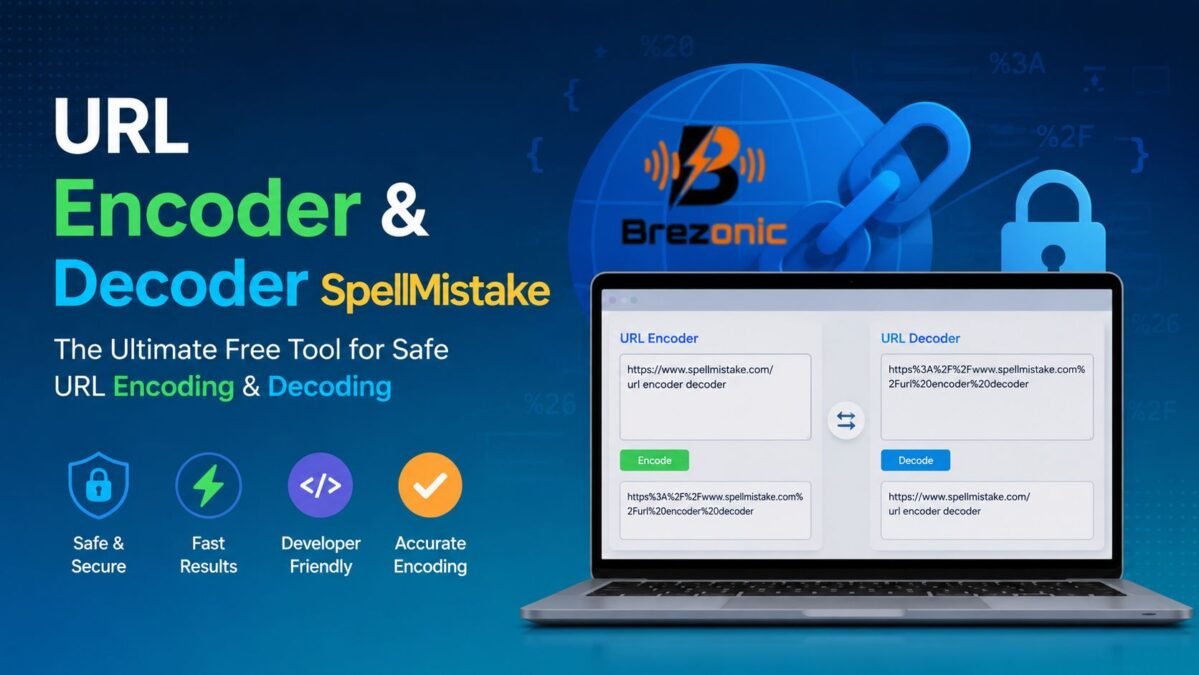
The URL Encoder and Decoder SpellMistake tool is a free online utility designed to simplify URL conversion.
Instead of manually replacing characters, users simply:
- Paste text or a URL
- Click Encode or Decode
- Copy the result instantly
The tool works directly in the browser without downloads or software installation.
Why URL Encoding Is Important
Encoding ensures URLs remain compatible across browsers, servers, and APIs.
Without proper encoding, URLs containing spaces or special symbols may:
- Break links
- Produce server errors
- Cause incorrect redirects
- Fail API requests
- Lose query parameters
Encoding prevents these problems by following international URL standards.
Features of a Good URL Encoder and Decoder Tool
A quality URL converter offers more than basic encoding.
Common features include:
Instant Encoding
Convert plain text into URL-safe format with one click.
Fast URL Decoding
Decode long encoded URLs into human-readable text instantly.
Free to Use
Most online tools require no registration or subscription.
Browser-Based
Everything works online without installing software.
Copy Button
Copy converted URLs directly to the clipboard.
Mobile Friendly
Use the tool on smartphones, tablets, laptops, and desktops.
Unlimited Usage
Encode or decode as many URLs as needed without restrictions.
Secure Processing
Many modern tools process data instantly without permanently storing user information.
Characters Commonly Encoded
Here are several characters frequently converted during URL encoding.
| Character | Encoded Value |
|---|---|
| Space | %20 |
| ! | %21 |
| # | %23 |
| $ | %24 |
| % | %25 |
| & | %26 |
| + | %2B |
| , | %2C |
| / | %2F |
| : | %3A |
| ; | %3B |
| = | %3D |
| ? | %3F |
| @ | %40 |
These encoded values help maintain URL integrity.
Who Uses URL Encoder and Decoder Tools?
Many professionals rely on these utilities every day.
Web Developers
Developers encode URLs while building websites, APIs, and applications.
SEO Experts
SEO specialists encode URLs containing special characters before sharing or indexing them.
Digital Marketers
Marketing campaigns often include tracking parameters that require proper URL formatting.
API Developers
REST APIs commonly require encoded parameters for successful communication.
Students
Programming students use encoding tools while learning web technologies.
IT Professionals
System administrators decode URLs during troubleshooting and debugging.
Common Use Cases
URL encoding has countless real-world applications.
Sharing Links
Prevent broken URLs when sharing links across emails and messaging platforms.
API Requests
Encode parameters before sending data to external services.
Search Queries
Search engines encode spaces and symbols automatically.
Database Storage
Safely store URLs inside databases.
Web Forms
Encode submitted values before processing them.
Redirect URLs
Ensure redirects work correctly across websites.
How to Encode a URL
Using the tool is extremely simple.
Step 1
Open the URL Encoder and Decoder SpellMistake tool.
Step 2
Paste your text or URL.
Step 3
Click the Encode button.
Step 4
Copy the encoded output.
The process usually takes less than one second.
How to Decode a URL
Decoding follows nearly identical steps.
Step 1
Paste the encoded URL.
Step 2
Click Decode.
Step 3
View the readable version.
Step 4
Copy or edit the decoded text.
Benefits of Using an Online URL Encoder
There are many reasons users prefer online tools.
Saves Time
Instant conversions eliminate manual encoding.
Reduces Errors
Automatic encoding minimizes mistakes.
Easy to Use
No coding knowledge required.
Cross-Platform
Works on Windows, macOS, Linux, Android, and iOS.
Free Access
Most tools are available at no cost.
Improves Productivity
Developers and marketers can complete tasks much faster.
URL Encoding vs URL Decoding
Although closely related, these processes serve different purposes.
| URL Encoding | URL Decoding |
|---|---|
| Converts text into URL-safe format | Restores original readable text |
| Used before sending URLs | Used after receiving encoded URLs |
| Replaces reserved characters | Converts encoded values back |
| Prevents URL errors | Improves readability |
Best Practices for URL Encoding
To avoid common issues, follow these recommendations.
- Encode spaces correctly.
- Encode special characters before sending API requests.
- Avoid manually editing encoded URLs.
- Decode URLs before debugging.
- Test encoded links before publishing.
- Use trusted encoding tools.
- Preserve URL structure during conversion.
Common Mistakes to Avoid
Many users accidentally create invalid URLs.
Some common errors include:
Double Encoding
Encoding an already encoded URL produces incorrect results.
Missing Encoding
Leaving spaces unencoded can break URLs.
Manual Editing
Changing encoded values manually often causes errors.
Encoding Entire URLs Incorrectly
Sometimes only parameters not the entire URL should be encoded.
Why Developers Prefer Online URL Tools
Professional developers often use browser-based utilities because they are:
- Faster than writing custom scripts
- Accessible from any device
- Easy to verify encoded values
- Helpful during debugging
- Reliable for testing APIs
These advantages make online tools an essential part of many development workflows.
Is URL Encoding Secure?
URL encoding is not encryption.
It simply converts characters into a standardized format that computers can safely interpret.
Anyone can decode an encoded URL.
For sensitive information, encryption not encoding should be used.
Tips for Better URL Management
To keep URLs clean and functional:
- Keep URLs simple and readable.
- Encode only when necessary.
- Avoid unnecessary special characters.
- Test links before publishing.
- Use encoding for dynamic parameters.
- Verify decoded results before editing.
Following these practices reduces errors and improves website reliability.
A URL Encoder and Decoder is an online tool that converts plain text into a URL-safe format (encoding) and converts encoded URLs back into readable text (decoding). It helps ensure URLs work correctly across browsers, servers, and applications.
URL encoding replaces special characters, spaces, and reserved symbols with a standardized format. This prevents broken links, server errors, and issues when sending data through web browsers or APIs.
Yes, the URL Encoder and Decoder SpellMistake tool is completely free to use. You can encode and decode unlimited URLs without creating an account or installing any software.
Conclusion
The URL Encoder and Decoder SpellMistake tool is an essential resource for anyone working with websites, APIs, digital marketing, or software development. By converting text into URL-safe formats and decoding encoded URLs back into readable text, it helps prevent broken links, improves compatibility, and saves valuable time.
Whether you’re debugging an API, optimizing website links, managing SEO campaigns, or simply sharing URLs online, a reliable URL encoder and decoder ensures your links remain accurate and functional. With instant processing, unlimited usage, and an easy-to-use interface, this free tool is a practical solution for both beginners and experienced professionals alike.