








Among the most dangerous and least understood neurological emergencies, hemorrhagic stroke represents a category of brain injury that demands immediate medical attention, specialized care, and a well-coordinated healthcare response. Unlike its more common counterpart — the ischemic stroke — a hemorrhagic event involves bleeding within or around the brain, making it particularly life-threatening and complex to treat. Understanding its causes, warning signs, and the systems that support patient survival is essential for both the public and healthcare professionals alike.
What Is a Hemorrhagic Stroke and Why Does It Happen?
A hemorrhagic stroke occurs when a blood vessel in the brain ruptures, causing blood to leak into surrounding tissue. This bleeding creates pressure on brain cells, depriving them of oxygen and leading to rapid cellular damage. There are two primary types: intracerebral hemorrhage, where bleeding occurs directly within the brain tissue, and subarachnoid hemorrhage, where blood spills into the space surrounding the brain.
The most common underlying causes include uncontrolled high blood pressure, the use of blood-thinning medications, arteriovenous malformations (AVMs), aneurysms, and in some cases, head trauma. Lifestyle factors such as smoking, excessive alcohol consumption, and a sedentary lifestyle significantly elevate the risk. Genetic predispositions also play a role, particularly in families with a history of vascular abnormalities.
Recognizing the Warning Signs
Time is the most critical factor in stroke survival. The classic signs of a hemorrhagic stroke often appear suddenly and with great intensity. Patients may experience a severe headache described as the “worst headache of their life,” sudden confusion, loss of consciousness, vomiting, vision disturbances, or weakness on one side of the body. Unlike ischemic strokes, hemorrhagic events tend to progress rapidly, leaving a very narrow window for effective intervention.
Public awareness campaigns using the FAST acronym — Face drooping, Arm weakness, Speech difficulty, Time to call emergency services — have helped communities identify stroke symptoms more quickly. However, hemorrhagic strokes sometimes present with additional symptoms that fall outside this simple framework, which is why broader education remains vital.
Diagnosis and the Role of Advanced Imaging
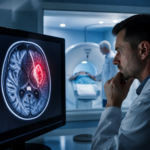
Accurate and rapid diagnosis is the cornerstone of effective hemorrhagic stroke management. Upon arrival at a hospital, patients typically undergo a CT scan, which can detect bleeding in the brain within minutes. MRI imaging may follow to provide a more detailed picture of the affected areas. Cerebral angiography is often used to identify the source of bleeding, particularly when an aneurysm or AVM is suspected.
The diagnostic process must be swift and precise. Every minute of delayed diagnosis can translate into millions of neurons lost. This is why stroke centers with dedicated neuro-imaging capabilities and round-the-clock specialist availability are not a luxury — they are a necessity. The infrastructure supporting these capabilities is often invisible to patients but absolutely critical to outcomes.
The Invisible Architecture of Stroke Care
What most patients and families never see is the extraordinary coordination that happens behind hospital walls. From the moment a stroke patient arrives, a cascade of clinical decisions, equipment checks, medication preparations, and specialist consultations begins. The behind-the-scenes effort that keeps healthcare running is a testament to how deeply interconnected every department must be — from emergency triage nurses to neurosurgeons, radiologists, pharmacists, and rehabilitation therapists. This invisible machinery is what separates a good outcome from a catastrophic one.
Treatment Approaches: From Emergency Intervention to Surgery
Treatment for hemorrhagic stroke depends heavily on the type, location, and severity of the bleed, as well as the patient’s overall health status. In many cases, the initial priority is to stabilize the patient, control blood pressure, and prevent further bleeding. Medications may be administered to reverse the effects of blood thinners if the patient was on anticoagulant therapy.
Surgical intervention is sometimes required. Procedures such as craniotomy allow surgeons to remove blood clots and relieve pressure on the brain. For aneurysm-related bleeds, surgical clipping or endovascular coiling may be performed to seal the ruptured vessel. Minimally invasive techniques have advanced significantly in recent years, offering better outcomes with reduced recovery times for eligible patients.
The Global Burden of Hemorrhagic Stroke
Hemorrhagic stroke accounts for approximately 10 to 15 percent of all strokes globally, yet it is responsible for a disproportionately high share of stroke-related deaths and long-term disability. Research published in peer-reviewed medical literature highlights significant disparities in outcomes between high-income and low-to-middle-income countries, largely due to differences in access to specialized care, diagnostic technology, and trained personnel. Global health research on stroke burden and outcomes continues to shape policy decisions and resource allocation in healthcare systems worldwide, underscoring the need for equitable investment in neurological services.
Recovery and Rehabilitation After Hemorrhagic Stroke
Surviving a hemorrhagic stroke is only the beginning of a long journey. Recovery varies enormously depending on the extent of brain damage, the patient’s age, and the speed of initial treatment. Many survivors face challenges including partial paralysis, speech difficulties, memory impairment, and emotional changes such as depression and anxiety.
Rehabilitation is a multidisciplinary process involving physiotherapists, occupational therapists, speech-language pathologists, neuropsychologists, and social workers. The goal is not merely to restore lost function but to help patients adapt to new realities and rebuild their quality of life. Family involvement and community support are equally important components of a successful recovery plan.
Cleveland Clinic Abu Dhabi: A Center of Excellence in Neuro-Vascular Care
For patients in the UAE and the broader region seeking world-class neurological care, Cleveland Clinic Abu Dhabi stands as a benchmark institution. Its neuro-vascular program brings together internationally trained specialists equipped with cutting-edge diagnostic and interventional tools. Patients presenting with a hemorrhagic stroke benefit from a fully integrated care pathway — from emergency response and advanced imaging to surgical intervention and long-term rehabilitation — all within a single, cohesive system designed around patient outcomes.
The institution’s commitment to evidence-based medicine, combined with its multidisciplinary team model, ensures that every patient receives individualized care tailored to the complexity of their condition. This level of specialized expertise is particularly vital for hemorrhagic stroke, where the margin for error is extraordinarily narrow.
Prevention: The Most Powerful Tool Available
While treatment has advanced considerably, prevention remains the most effective strategy against hemorrhagic stroke. Managing hypertension through lifestyle changes and medication is the single most impactful step an individual can take. Regular health screenings, maintaining a healthy weight, avoiding tobacco, limiting alcohol, and staying physically active all contribute meaningfully to reducing vascular risk.
For individuals with known risk factors such as AVMs or family history of aneurysms, proactive imaging and specialist consultations can identify vulnerabilities before they become emergencies. The conversation between patient and physician — honest, informed, and ongoing — is the foundation of effective prevention.
Conclusion
Hemorrhagic stroke is a medical emergency that tests the limits of both human biology and healthcare systems. Its sudden onset, rapid progression, and potential for devastating outcomes make it one of the most challenging conditions in modern medicine. Yet with the right combination of public awareness, rapid response infrastructure, specialized clinical expertise, and robust rehabilitation support, survival and meaningful recovery are achievable goals. Investing in these systems — and in the people who power them — is not optional. It is a fundamental obligation of any society that values the health of its citizens.