







Word puzzle fans are always looking for a challenge that goes beyond the usual five-letter guessing game. That is exactly why Octordle exploded in popularity among players who wanted something deeper, tougher, and far more strategic than a standard daily puzzle. Instead of solving one hidden word, players are tasked with solving eight different words at the same time using a limited number of guesses. It sounds chaotic at first, but once the strategy clicks, the game becomes incredibly satisfying.
The biggest obstacle most players face is not vocabulary. It is information overload. Eight grids constantly changing with every guess can feel overwhelming, especially during the final few turns when one wrong decision can ruin an otherwise perfect run. That is where smart tactics matter more than luck. A strong approach transforms difficult rounds into manageable ones.
Many players search for an effective octordle hint because they want guidance without completely spoiling the puzzle. The ideal hint system nudges the brain in the right direction while preserving the thrill of solving the challenge independently. Good hints improve pattern recognition, sharpen deduction skills, and reduce wasted guesses.
Unlike easier word games, Octordle rewards patience and planning. Every move affects multiple boards simultaneously. One carefully selected guess can unlock several words at once, while a careless guess can waste critical opportunities. Understanding how to balance exploration with precision becomes the core skill that separates average players from consistent winners.
The rise of daily word games has also changed how people think about language puzzles. These games are no longer just casual distractions. They have become part of many players’ routines, similar to crossword puzzles, Sudoku, or brain-training exercises. Octordle sits near the top of that ecosystem because it combines vocabulary, logic, memory, and strategy in a way that few other games manage successfully.
A veteran puzzle enthusiast once described the game perfectly: “Octordle is less about knowing words and more about managing information.” That quote captures the heart of the experience. The challenge is not simply discovering hidden words. The real challenge is tracking clues across eight evolving puzzle spaces without losing focus.
This article explores every major strategy, mindset shift, and solving technique that can improve performance. From opening-word choices to late-game elimination methods, every section is designed to help players become smarter and more consistent. Whether someone is struggling to finish puzzles or chasing flawless solves, mastering these ideas can dramatically improve results.
Why Octordle Feels More Difficult Than Other Word Games
The first reason Octordle feels harder is cognitive load. In simpler games, players only need to track one set of clues. In Octordle, every guess produces information across eight separate boards simultaneously. That creates a constant stream of data that must be organized mentally. Even experienced word-game players can feel overwhelmed during their first few attempts.
Another factor is guess efficiency. Traditional word games often allow room for experimentation because there is only one target word. In Octordle, every wasted guess hurts eight puzzles at once. Players cannot afford random attempts. They need strategic guesses that reveal as many useful letters as possible across multiple boards.
The pace of the game also contributes to the challenge. Early rounds may feel manageable because there are many open possibilities. Later rounds become more intense because several boards may remain partially solved at the same time. Managing these unfinished words under pressure often causes mistakes, especially when similar patterns appear across grids.
One of the most common reasons players search for an octordle hint is the mental fatigue caused by tracking repeated letter combinations. Words sharing endings like “-IGHT” or “-OUND” can easily blur together when multiple boards contain similar structures. This creates situations where players know the answer is nearby but cannot immediately identify it.
Vocabulary breadth also matters more in Octordle than in simpler games. Rare letter combinations appear frequently because eight words create more opportunities for unusual patterns. Players who rely only on common five-letter words eventually hit a wall. Expanding vocabulary becomes a surprisingly valuable advantage.
The emotional aspect should not be ignored either. Solving seven words and failing the final board can feel frustrating. That pressure sometimes leads players to panic and abandon logical deduction. Remaining calm is one of the hidden skills behind consistent success.
Experienced players often recommend slowing down during the final turns. Quick guessing usually increases errors. Careful review of all boards before each move helps prevent avoidable mistakes. That disciplined approach is one of the biggest differences between casual and advanced players.
The Best Starting Words for Consistent Success
Opening strategy shapes the entire game. Strong starting words maximize information while minimizing wasted letters. The goal is not to guess a hidden word immediately. The goal is to reveal useful patterns across all eight boards.
The most effective starting words usually contain common vowels and frequently used consonants. Letters such as E, A, R, T, O, N, and S appear regularly in English words, making them valuable early-game tools. Words that combine these letters efficiently provide broad coverage.
Here is a useful comparison table for popular opening strategies:
| Starting Word | Key Strengths | Potential Weaknesses |
|---|---|---|
| SLATE | Strong vowel and consonant balance | Misses common letters like R and N |
| CRANE | Excellent overall frequency coverage | Less useful for uncommon words |
| AUDIO | Reveals vowels quickly | Weak consonant discovery |
| STARE | Great letter diversity | Can overlap too much with later guesses |
| ROAST | Balanced structure and flexibility | Slightly weaker for rare letters |
| TRACE | Excellent information spread | May duplicate patterns early |
Many advanced players prefer using two complementary opening words instead of one. This approach sacrifices an early solve attempt in exchange for maximum information. For example, pairing “CRANE” with “TOILS” covers ten highly useful letters with minimal overlap.
An effective octordle hint often focuses on starting efficiency because poor opening guesses create long-term problems. If too many common letters remain undiscovered after the first few turns, later rounds become unnecessarily difficult.
Another useful tactic involves avoiding repeated letters during early guesses. Duplicate letters provide less overall information. During the opening phase, broad exploration matters more than pinpoint accuracy.
Some players obsess over finding the “perfect” opening word, but flexibility matters more than perfection. Strong players adapt their choices based on revealed patterns rather than relying on rigid routines. The opening strategy should provide a foundation, not a fixed script.
It is also important to understand that no starting word guarantees success. Word puzzles contain randomness, and even excellent openings sometimes produce awkward boards. The objective is not certainty. The objective is increasing average efficiency over many games.
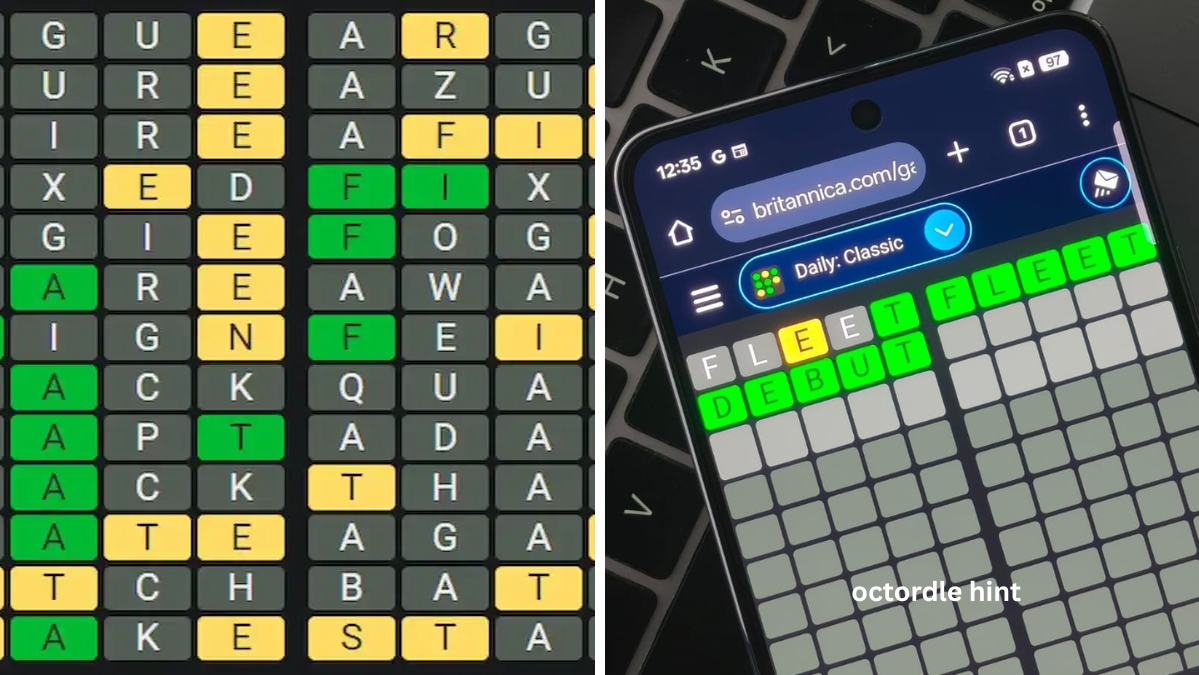
How Information Management Becomes the Real Challenge
Most beginners think vocabulary determines success in Octordle. In reality, information management is usually more important. The game constantly floods players with clues, and the ability to organize those clues separates strong solvers from struggling ones.
Every guess affects eight boards at the same time. That means players must mentally categorize confirmed letters, eliminated letters, possible placements, and unresolved patterns across multiple puzzle spaces. Losing track of even one important clue can create unnecessary confusion later.
One effective technique is prioritization. Instead of trying to solve every board equally, experienced players focus on the grids with the most revealed information. Solving easier boards first reduces mental clutter and creates more room to focus on difficult patterns later.
Another powerful tactic involves grouping similar patterns together mentally. If multiple boards contain structures like “_ A _ E _,” players can evaluate shared possibilities simultaneously rather than treating each puzzle independently. This improves speed and reduces cognitive strain.
A strong octordle hint frequently encourages players to stop guessing impulsively. Reviewing every board before each move prevents tunnel vision. Many losses occur because players become obsessed with one difficult word and ignore obvious opportunities elsewhere.
Pattern recognition also improves with repetition. Over time, players begin noticing common endings, vowel structures, and consonant combinations more quickly. That familiarity reduces mental workload and allows faster deductions.
Some players use physical notes or digital scratchpads to track possibilities. While not necessary, external organization tools can help during especially difficult puzzles. Even simple shorthand notes about possible endings or eliminated letters can improve decision-making.
Another overlooked skill is recognizing when a guess should prioritize discovery instead of solving. Sometimes the best move is not an obvious answer attempt. Instead, it may be a strategic probe designed to test several unresolved letters simultaneously. That disciplined mindset often creates dramatic improvements in overall performance.
Smart Midgame Decisions That Save Critical Guesses
The midgame is where most Octordle puzzles are won or lost. Early rounds provide information, while the final rounds demand precision. The middle phase connects those two stages and requires careful strategic thinking.
At this point, several boards usually contain partial word structures. Players must decide whether to finish nearly solved boards immediately or continue gathering broader information. This decision depends heavily on remaining guesses and puzzle complexity.
Strong players often delay solving obvious words if another guess can reveal useful information across multiple boards. That may sound counterintuitive, but efficiency matters more than immediate completion. A single exploratory guess can unlock several future solutions simultaneously.
A valuable octordle hint during the midgame is to watch for overlapping uncertainty. If several boards still contain unknown vowels or consonants, choosing a word that tests those letters together creates better long-term efficiency.
Another common mistake involves emotional guessing. Players sometimes rush to solve a nearly completed word because it feels satisfying. Unfortunately, that emotional decision can waste opportunities to gather broader puzzle information.
Letter positioning becomes increasingly important during the midgame as well. By this stage, many players know which letters belong in each word but still struggle with arrangement. Paying attention to common English word structures helps narrow possibilities quickly.
For example, combinations like “TH,” “CH,” “SH,” and “ING” appear frequently. Recognizing these patterns reduces unnecessary experimentation. Similarly, understanding which letters rarely appear together can eliminate impossible options.
Experienced players also become skilled at identifying trap patterns. Words with multiple possible solutions create dangerous situations late in the puzzle. Structures like “_IGHT” can produce several valid possibilities including LIGHT, MIGHT, FIGHT, and RIGHT. Handling these carefully prevents guess shortages.
One expert puzzle player once said, “The middle turns decide whether the endgame feels calm or chaotic.” That observation reflects how important efficient information gathering becomes before the final guesses arrive.
Common Mistakes That Cause Avoidable Losses
Many Octordle losses come from predictable habits rather than difficult puzzles. Recognizing these common mistakes helps players improve much faster than simply playing more games blindly.
The biggest mistake is tunnel vision. Players often become obsessed with one stubborn board and ignore easier opportunities elsewhere. This wastes mental energy and reduces overall efficiency. Strong players constantly rotate attention between boards.
Another frequent issue is guessing without reviewing all available information. Because the game involves so many grids, players sometimes forget confirmed letters or overlooked placements. Taking a few extra seconds before each guess dramatically reduces careless errors.
Poor letter testing also creates problems. Some players repeatedly guess words containing already confirmed letters instead of exploring unresolved possibilities. Efficient guesses maximize new information whenever possible.
Searching for an octordle hint usually becomes necessary after players fall into repetitive guessing cycles. Once frustration appears, logical deduction often disappears. Breaking that cycle requires slowing down and reevaluating the full puzzle state calmly.
Another mistake involves ignoring letter frequency. Certain letters appear more commonly in English words than others. Overvaluing rare letters early can reduce information efficiency. Strategic players prioritize high-frequency letters during exploration phases.
Late-game panic is another major problem. Players sometimes rush final guesses because the remaining turn count feels intimidating. Ironically, slower thinking often produces faster solutions because it prevents unnecessary mistakes.
Repeated-letter assumptions also trap many players. Some players forget that hidden words may contain duplicate letters, leading to incorrect eliminations. Recognizing when repeated letters become plausible is essential for advanced solving.
Vocabulary limitations create additional issues. Players occasionally know the structure of a word but cannot recall valid possibilities quickly enough. Expanding general word familiarity through reading and puzzle practice naturally improves this skill over time.
One of the most underrated improvements comes from reviewing failed puzzles afterward. Analyzing where mistakes occurred reveals patterns in decision-making. That reflective habit accelerates long-term improvement more effectively than mindless repetition.
Why Pattern Recognition Matters More Than Raw Vocabulary
Many people assume excellent vocabulary guarantees strong performance in word games. In Octordle, pattern recognition is usually more valuable. Recognizing structural clues quickly allows players to solve puzzles efficiently even when unfamiliar words appear.
Pattern recognition involves understanding how English words are commonly built. Certain letter combinations appear frequently, while others rarely occur. Experienced players internalize these tendencies and use them subconsciously during gameplay.
For example, vowels often follow predictable distributions. Consonant clusters such as “STR,” “THR,” and “CH” appear regularly in English words. Identifying these structures early helps narrow possibilities rapidly.
A useful octordle hint often focuses less on specific answers and more on recognizing likely word formations. Instead of brute-forcing possibilities randomly, players can use linguistic logic to guide their guesses.
Word endings provide especially powerful clues. Suffixes like “-ING,” “-ER,” “-LY,” and “-ED” appear frequently. Spotting partial versions of these endings helps players identify solutions faster.
Another important aspect involves eliminating impossible combinations. Certain letters almost never appear together naturally in English. Understanding these restrictions prevents wasted guesses and improves deduction speed.
Pattern recognition also reduces cognitive strain. Instead of analyzing every possibility equally, the brain begins prioritizing likely structures automatically. This allows advanced players to process complex boards much more efficiently.
Interestingly, strong pattern recognition often compensates for weaker vocabulary. Players may solve unfamiliar words simply because the structure logically narrows the possibilities. This is one reason consistent practice produces noticeable improvement over time.
Reading widely can strengthen this skill naturally. Exposure to varied vocabulary improves subconscious familiarity with word structures and letter relationships. Crossword puzzles and other word games also reinforce these recognition patterns effectively.
How Expert Players Approach Difficult Boards
Advanced Octordle players rarely panic during difficult rounds because they approach challenges systematically. Their methods emphasize structure, efficiency, and emotional control rather than random experimentation.
One hallmark of expert play is deliberate pacing. Strong players resist the urge to guess immediately after discovering partial clues. Instead, they pause to evaluate how each potential guess affects all remaining boards simultaneously.
Another defining habit is strategic sacrifice. Experts sometimes delay solving easy words because broader information gathering offers greater long-term value. This disciplined mindset prevents inefficient guess usage.
When players search for an octordle hint, they often expect direct clues. Experts think differently. They focus on maximizing information density rather than chasing immediate answers. That perspective fundamentally changes gameplay quality.
Advanced players also recognize pivot moments within puzzles. Sometimes a board becomes too ambiguous to solve efficiently with current information. Instead of forcing guesses, experts temporarily shift attention elsewhere until more clues emerge naturally.
Another key skill involves balancing certainty and exploration. Strong players understand when a guaranteed solve is necessary and when exploratory guessing offers greater strategic value.
Experts also excel at tracking unresolved letter pools mentally. Rather than viewing each board separately, they analyze the entire puzzle ecosystem together. This holistic awareness improves deduction efficiency significantly.
A competitive word-game enthusiast once explained the mindset perfectly: “The puzzle rewards patience more than brilliance.” That philosophy reflects how careful thinking consistently outperforms impulsive guessing.
Experienced players additionally recognize emotional traps. Frustration often pushes players toward reckless guesses, especially during difficult endgames. Maintaining composure preserves logical reasoning and prevents avoidable mistakes.
Practice gradually builds these habits naturally. Over time, efficient puzzle management becomes intuitive rather than consciously forced. That transition marks the difference between intermediate and advanced play.
The Psychology Behind Daily Puzzle Addiction
Daily puzzle games create powerful engagement because they combine routine, challenge, and reward in a highly satisfying format. Octordle amplifies this effect by offering deeper complexity and stronger emotional highs than simpler alternatives.
Part of the appeal comes from achievable mastery. The game feels difficult enough to remain engaging while still allowing visible improvement over time. Players experience a rewarding sense of progression as strategies sharpen and solving consistency improves.
The social aspect also contributes heavily to popularity. Sharing results, discussing strategies, and comparing performances creates community engagement. Many players enjoy the collective experience surrounding daily puzzle culture.
A strong octordle hint often spreads quickly through online communities because players enjoy collaborative problem-solving without fully spoiling solutions. That balance between assistance and independence strengthens player investment.
The brain also responds positively to incremental success. Each solved word creates a small psychological reward, encouraging continued focus and engagement. Solving all eight words produces a particularly satisfying sense of accomplishment.
Routine matters as well. Many players incorporate daily puzzles into morning coffee rituals, lunch breaks, or evening relaxation time. These consistent habits strengthen emotional attachment to the game.
The challenge level is another major factor. Easy games become boring quickly, while impossible games create frustration. Octordle occupies a sweet spot where victory feels earned but achievable with practice.
Competition further increases engagement. Some players track streaks, speed records, or guess efficiency. Others compete informally with friends or online communities. These additional goals extend long-term interest beyond simple completion.
Puzzle games also provide a sense of control and structure. In a fast-moving digital environment full of distractions, focused problem-solving offers a refreshing mental experience. Many players describe word puzzles as calming despite their difficulty.
Advanced Solving Techniques for Consistent Wins
Once players understand the basics, advanced techniques can dramatically improve consistency. These methods focus on efficiency, deduction, and strategic forecasting rather than simple guessing.
One advanced approach involves targeted probing. Instead of guessing possible solutions directly, players intentionally choose words that test several unresolved letters simultaneously. This accelerates information gathering and reduces ambiguity.
Another powerful strategy is board synchronization. Skilled players identify opportunities where one guess benefits multiple grids at once. These high-efficiency guesses create major momentum shifts during difficult puzzles.
An effective octordle hint for advanced players often involves identifying hidden information gaps rather than obvious answers. Sometimes the most valuable move reveals letters that affect several unresolved boards simultaneously.
Experts also monitor guess economy constantly. Every move carries opportunity cost. Using a guess to solve one board may reduce flexibility elsewhere. Balancing immediate progress against future efficiency becomes increasingly important at higher skill levels.
Another advanced tactic involves predictive elimination. Experienced players mentally track which remaining words are still plausible based on known letter distributions. This narrows possibilities before direct confirmation appears.
Timing also matters significantly. Skilled players know when to transition from exploration to precision. Delaying this transition too long wastes guesses, while switching too early limits information gathering.
Another subtle technique involves avoiding redundant placements. If several boards share similar unresolved patterns, experts test differentiating letters first instead of repeating already likely structures.
Memory training also improves performance. Strong players become better at retaining multiple clue sets simultaneously, reducing the need for constant visual rechecking. This increases solving speed and mental clarity.
Perhaps the most important advanced skill is adaptability. No strategy works perfectly for every puzzle. Great players remain flexible, adjusting tactics based on board states, remaining guesses, and evolving information patterns.
Building Long-Term Improvement Through Practice
Improvement in Octordle rarely happens instantly. Consistent growth comes from deliberate practice, reflection, and gradual refinement of solving habits. Players who approach the game thoughtfully improve much faster than those relying purely on repetition.
One effective practice method involves analyzing failed games afterward. Reviewing mistakes reveals recurring weaknesses such as inefficient openings, emotional guessing, or poor information management. Identifying these patterns creates targeted improvement opportunities.
Another valuable habit is experimenting with different starting strategies. Relying on the same opening words forever can limit adaptability. Testing alternative combinations improves flexibility and broadens strategic understanding.
Many players search for an octordle hint because they feel stuck at a certain skill level. Often, the solution is not more hints but better self-analysis. Understanding why mistakes occur matters more than memorizing isolated tricks.
Vocabulary expansion also supports long-term growth. Reading broadly exposes players to uncommon letter combinations and unfamiliar structures. This improves recognition speed during difficult puzzles.
Watching skilled players solve puzzles can also provide insight. Observing how experts prioritize boards, manage guesses, and maintain composure reveals strategic habits that may not be obvious independently.
Consistency matters more than marathon sessions. Daily practice builds pattern familiarity gradually over time. Even short regular sessions strengthen deduction speed and mental organization.
Another overlooked improvement method involves slowing down intentionally. Many mistakes happen because players rush. Deliberate pacing improves accuracy and trains better decision-making habits.
Patience is essential during the learning process. Difficult puzzles sometimes produce losses even for experienced players. Treating failures as learning opportunities rather than frustrations creates healthier long-term progress.
One veteran player summarized the improvement journey beautifully: “At first you solve words. Eventually you solve systems.” That shift from isolated guessing to structured reasoning marks true mastery.
Why Community Discussions Improve Puzzle Skills
Online puzzle communities have become an important part of the modern word-game experience. Forums, social media groups, and discussion threads allow players to exchange strategies, celebrate successes, and analyze difficult puzzles together.
These discussions expose players to alternative solving methods. Someone struggling with inefficient openings may discover entirely new approaches simply by reading community conversations.
A well-timed octordle hint shared within a discussion group can help players recognize strategic concepts they previously overlooked. Often the most useful advice is surprisingly simple, such as slowing down or prioritizing unresolved consonants more carefully.
Communities also normalize failure. Seeing experienced players occasionally struggle reminds newer players that difficult puzzles challenge everyone. This reduces frustration and encourages persistence.
Another benefit involves vocabulary expansion. Discussions frequently introduce uncommon words, unusual patterns, and clever deduction techniques that players might not encounter alone.
Friendly competition further increases engagement. Comparing streaks, completion rates, or solving efficiency motivates many players to refine their strategies and continue improving.
Community-created solving guides can also accelerate learning dramatically. These resources often break down advanced concepts into accessible explanations that beginners can apply immediately.
Importantly, strong puzzle communities usually value non-spoiler discussions. Players enjoy sharing hints, observations, and solving experiences without ruining the satisfaction of independent discovery.
The collaborative culture surrounding word games has helped sustain their popularity. Solving puzzles becomes more enjoyable when connected to broader shared experiences and conversations.
Conclusion
Octordle stands out because it transforms simple word guessing into a sophisticated exercise in logic, pattern recognition, and information management. The challenge is not merely discovering hidden words. It is learning how to think strategically under pressure while balancing eight evolving puzzle spaces simultaneously.
Players who improve consistently usually focus less on luck and more on process. Efficient starting words, careful midgame planning, strong pattern recognition, and emotional discipline all contribute to long-term success. Every puzzle becomes an opportunity to sharpen deduction skills and develop smarter habits.
The search for the perfect octordle hint often leads players toward deeper strategic understanding rather than simple answers. Helpful guidance encourages smarter thinking without removing the satisfaction of solving independently. That balance is part of what makes the game so rewarding.
Whether someone is brand new to Octordle or chasing elite-level consistency, the core principles remain the same. Slow down, gather information efficiently, trust logical deduction, and remain flexible. Improvement comes gradually, but the progress feels deeply satisfying.
The beauty of the game lies in its combination of complexity and accessibility. Every puzzle creates a fresh challenge, yet every solved board reinforces the sense that smarter thinking leads to better outcomes. That rewarding cycle is why so many players keep returning daily.
FAQ
What is the best opening strategy for Octordle?
The best opening strategy focuses on maximizing information rather than immediately solving words. Strong starting guesses usually contain common vowels and consonants while avoiding repeated letters. Many players prefer using two complementary opening words that cover a broad range of high-frequency letters.
How often should players use an octordle hint?
Players should use hints sparingly and strategically. Helpful guidance works best when it nudges logical thinking instead of revealing direct answers. Using hints to improve deduction skills creates better long-term growth than relying on constant assistance.
Why do players struggle during the final turns?
Late-game struggles usually happen because several boards remain partially unresolved at the same time. Similar word patterns, guess pressure, and emotional frustration can create rushed decisions. Slowing down and reviewing every board carefully helps reduce avoidable mistakes.
Are vocabulary skills more important than strategy?
Strategy is generally more important than raw vocabulary. While knowing more words certainly helps, efficient information management, pattern recognition, and logical deduction usually determine success. Many strong players solve unfamiliar words through structural reasoning alone.
How can players improve consistency in Octordle?
Consistent improvement comes from analyzing mistakes, practicing regularly, and refining strategic habits. Strong players focus on efficient guess usage, balanced board management, and disciplined pacing rather than random experimentation.
Why is Octordle more addictive than simpler word games?
The game creates a satisfying mix of challenge, progression, and daily routine. Solving eight interconnected words produces a stronger sense of accomplishment than simpler puzzles. The strategic depth also keeps gameplay engaging over long periods.
Does practicing other word games help with Octordle?
Yes, other word games can strengthen vocabulary, pattern recognition, and deduction skills that transfer directly into Octordle. Crossword puzzles, anagrams, and traditional five-letter guessing games all help reinforce useful mental habits.