








Keeping up with digital Stay Updated Always TXEPC can feel like a full-time job. New software versions, security warnings, policy changes, system alerts, deadlines, and industry news appear every day. Important information can easily become buried under ordinary notifications. This is where the idea behind Stay Updated Always TXEPC 2026 becomes useful.
TXEPC is commonly described as a structured update-tracking concept designed to collect, organize, prioritize, and manage changing information. Rather than checking several websites, applications, emails, and dashboards separately, users can follow one organized process. The main goal is simple: receive the right update, understand its importance, and take action at the right time.
Quick Information
| Information | Details |
|---|---|
| System Name | Stay Updated Always TXEPC |
| Updated Version | 2026 |
| System Type | Smart update-management framework |
| Primary Purpose | Tracking and organizing important updates |
| Suitable For | Individuals, students, teams, and businesses |
| Experience Required | Beginner-friendly |
| Information | Details |
|---|---|
| Main Features | Alerts, filtering, prioritization, and update history |
| Priority Levels | Critical, high, medium, and low |
| Supported Use | Software, security, deadlines, news, and reminders |
| Key Benefit | Reduces missed updates and information overload |
| Security Advice | Verify alerts through official platforms |
| Recommended Routine | Daily alert checks and weekly reviews |
What Is Stay Updated Always TXEPC?
Stay Updated Always TXEPC is best understood as a smart information-management framework rather than one universally recognized application. It represents a method of continuously tracking updates from selected sources and turning them into useful alerts.
Some online descriptions interpret TXEPC as a Tracking and Exchange Protocol for Continuous updates. In everyday terms, that means information is collected, filtered, classified, and delivered to users according to its relevance and urgency.
Imagine having several types of information arriving at the same time:
- A critical security patch for your computer
- A routine mobile application update
- A change to an important deadline
- A promotional newsletter
- A new feature announcement
- An urgent account warning
Without a proper system, all these messages may appear equally important. TXEPC solves that problem by creating an organized flow in which urgent alerts receive immediate attention while less important updates can wait for a later review.
Why Staying Updated Matters in 2026
Digital platforms are developing faster than ever. Applications receive frequent improvements, online services change their policies, and security threats can emerge with very little warning. Missing an update may lead to more than simply losing access to a new feature.
Outdated systems can experience compatibility problems, weaker security, poor performance, and unexpected errors. Businesses may also face missed deadlines, communication failures, or compliance concerns if essential notices are overlooked.
The challenge is not a lack of information. In fact, most people receive too much of it. The real challenge is deciding what deserves attention.
The Stay Updated Always TXEPC 2026 approach helps reduce information overload by separating essential notices from unnecessary noise. It encourages users to create a reliable routine instead of reacting randomly to every notification.
How Does the TXEPC Smart System Work?
A TXEPC-style system normally follows a straightforward information cycle:
Collect → Filter → Prioritize → Notify → Act → Review
1. Collecting information
The process begins by connecting trusted information sources. These may include official applications, software dashboards, email accounts, calendars, company portals, device settings, or verified notification channels.
The purpose is to bring scattered information into one manageable location.
2. Filtering unnecessary content
Not every update deserves the user’s time. A smart filtering process removes duplicate alerts, promotional messages, expired notices, and updates unrelated to the user’s interests.
Good filtering is essential because a system that sends too many notifications eventually becomes easy to ignore.
3. Assigning priority levels
After filtering, updates can be placed into different categories. A simple structure might include:
- Critical: Requires immediate action
- High priority: Should be addressed within 24 hours
- Medium priority: Can be reviewed during the week
- Low priority: Can be included in a monthly summary
A security warning affecting personal data would be critical, while a small visual improvement in an application would probably be low priority.
4. Delivering relevant alerts
Once an update is classified, the system delivers it through the most suitable channel. Urgent alerts might appear as mobile notifications, while routine announcements could be included in a daily or weekly summary.
This prevents important information from becoming mixed with ordinary messages.
5. Recording completed actions
A useful TXEPC workflow does not stop after sending a notification. It also allows users to record whether the update was reviewed, installed, postponed, or completed.
Keeping a basic history is especially valuable for businesses managing several devices, accounts, or team members.
Main Features of Stay Updated Always TXEPC 2026
The exact setup can vary according to the tools being used, but an effective smart update system generally includes several core features.
Centralized dashboard
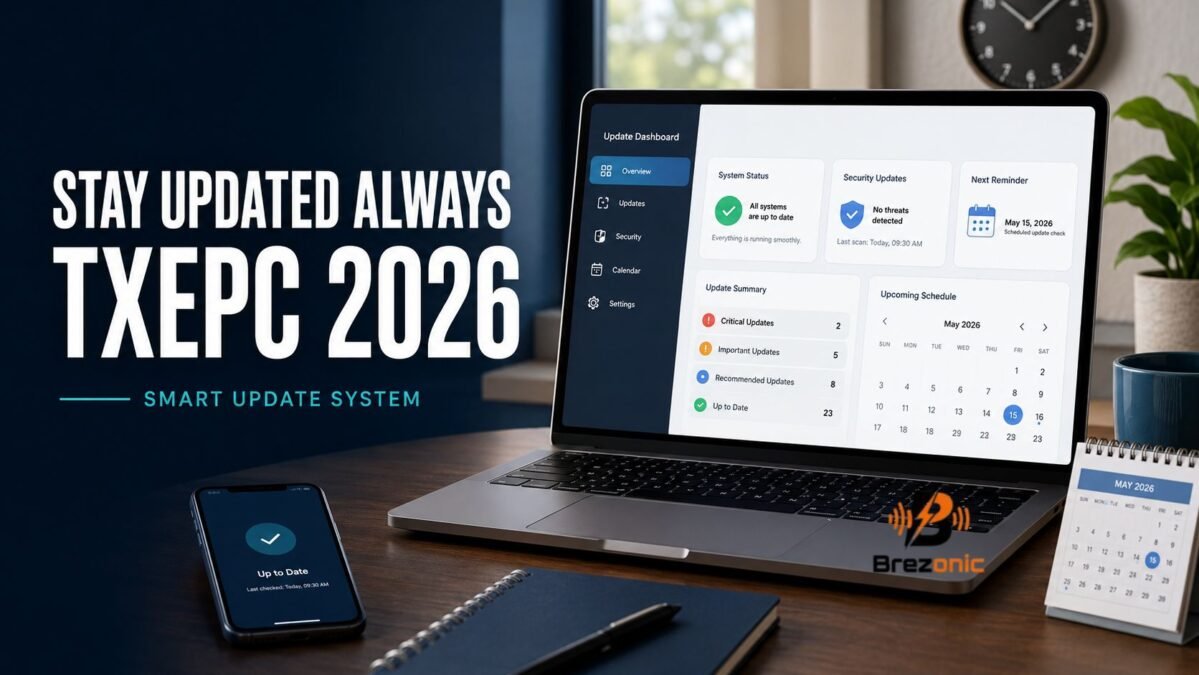
A central dashboard displays important information in one location. Users no longer need to open numerous applications simply to discover whether something has changed.
Real-time notifications
Time-sensitive alerts can be delivered as soon as they are detected. This is useful for security incidents, account activity, service disruptions, and urgent deadline changes.
Personalized preferences
Users can choose which subjects, products, services, or projects they want to follow. Personalization keeps the system focused and reduces irrelevant alerts.
Automatic categorization
Smart rules can sort updates by topic, date, source, and priority. For example, messages containing terms such as “security,” “payment,” or “deadline” may automatically receive a higher priority.
Update history
An organized archive shows which notices have already been handled. This prevents confusion and makes it easier to review past changes.
Cross-device access
A flexible setup can make information available on computers, tablets, and mobile devices. This allows users to check important updates wherever they are.
Benefits for Everyday Users
The Stay Updated Always TXEPC concept is not limited to technology specialists. Ordinary users can apply the same principles to personal devices, subscriptions, appointments, financial reminders, education, and online accounts.
The system can help beginners:
- Avoid missing important deadlines
- Keep applications and devices secure
- Reduce unnecessary notifications
- Save time when checking multiple services
- Organize information by importance
- Build a consistent update routine
- Recognize suspicious or fake alerts
The biggest advantage is peace of mind. Users do not need to check every platform repeatedly because they have a clear process for monitoring what matters.
How Businesses Can Use the TXEPC Approach
Businesses often manage a much larger stream of information. Employees may need to follow software releases, customer requests, security warnings, internal announcements, inventory changes, and regulatory deadlines.
A TXEPC-style framework can place these updates into separate categories and assign responsibility to the correct team. Technical alerts can go to IT staff, customer issues to support teams, and financial deadlines to the accounts department.
Managers can also use an update log to confirm when an important task was completed. This creates greater accountability and reduces the likelihood of two employees handling the same issue—or assuming that someone else has already handled it.
For small businesses, the system does not need to be complicated. A shared dashboard, organized inbox, team calendar, and clear priority labels may be enough to create a dependable workflow.
How to Set Up a Simple TXEPC System
Beginners can build a practical update system by following a few manageable steps.
Choose your essential sources
Start with official sources connected to the services you actually use. Avoid adding every available news feed or notification channel.
Create one update inbox
Direct relevant alerts into a dedicated email folder, dashboard, or task-management area. Keeping updates separate from ordinary messages makes them easier to review.
Use clear labels
Create labels such as Critical, Action Required, This Week, Informational, and Completed. The labels should be easy to understand at a glance.
Set notification rules
Allow instant notifications only for urgent matters. Schedule summaries for medium- and low-priority information.
Establish a review schedule
Spend around ten minutes checking urgent alerts each day. Set aside a longer period once a week to process routine updates and clear completed items.
Keep a simple record
Record the update date, action taken, person responsible, and final result. Even a basic log can prevent repeated work and forgotten tasks.
Security and Privacy Considerations
Any platform that collects notifications may handle sensitive information. Users should therefore protect their update dashboards and connected accounts carefully.
Use strong, unique passwords and enable multi-factor authentication whenever it is available. Review connected services regularly and remove any account that is no longer needed. It is also wise to limit permissions so that the system can access only the information required for its purpose.
Users should be cautious about unexpected update messages. Fake alerts often use frightening language or demand immediate clicks. Instead of following an unfamiliar link, open the official application or website directly and confirm whether the update is genuine.
Major updates should also be approached carefully. Back up important files before making significant system changes, especially when working with business information or irreplaceable personal data.
Common Mistakes to Avoid
One common mistake is turning on every possible notification. This creates alert fatigue and makes truly important messages harder to notice.
Another mistake is treating every update as equally urgent. Minor design changes do not require the same response as a serious security patch.
Users should also avoid depending entirely on unverified third-party messages. Whenever an update affects security, payments, privacy, or account access, confirm it through the official service.
Finally, do not build an overly complicated workflow. The best system is one that can be followed consistently. A simple dashboard checked regularly is more effective than an advanced setup that becomes too difficult to maintain.
TXEPC is often described as a tracking and exchange framework for continuous updates. It refers to organizing information from multiple sources and delivering relevant alerts according to their priority.
It is better understood as a smart update-management concept or workflow. Different tools, dashboards, calendars, and notification services can be used to create a TXEPC-style system.
Yes. Beginners can start with a dedicated update inbox, a few trusted sources, basic priority labels, and a daily or weekly review routine.
Final Thoughts
Stay Updated Always TXEPC 2026 represents a practical answer to modern information overload. Its value comes from bringing scattered updates together, filtering unnecessary content, assigning priorities, and helping users act before important information is forgotten.
Beginners do not need expensive software or advanced technical knowledge to benefit from the approach. A trusted set of sources, one organized inbox, sensible priority labels, and a regular review schedule can create an effective smart system.
The purpose is not to follow every change happening online. It is to recognize the updates that matter, respond at the right time, and ignore distractions with confidence. When used carefully, the TXEPC approach can make digital life more organized, secure, and manageable throughout 2026.