







Tech Hacks PBLinuxGaming has evolved from a niche hobby into a practical alternative for players who want flexibility, performance, and greater control over their computers. Thanks to tools such as Steam Play, Proton, Wine, Lutris, and GameMode, thousands of popular games can now run smoothly on Linux. However, installing a game is only the beginning. The right settings, drivers, compatibility tools, and performance tweaks can make a major difference.
This Tech Hacks PBLinuxGaming guide explains how to create a faster, more stable, and more enjoyable Linux gaming experience. Whether you are a beginner switching from Windows or an experienced Linux user looking for additional optimizations, these practical tips can help you get more from your system.
Quick Information
| Information | Details | Information | Details |
|---|---|---|---|
| Topic Name | Tech Hacks PBLinuxGaming | Main Category | Linux Gaming |
| Primary Purpose | Smarter gaming optimization | Target Users | Beginner and experienced Linux gamers |
| Main Platform | Linux computers | Popular Gaming Tool | Steam Play |
| Compatibility Layer | Proton and Wine | Game Manager | Lutris |
| Performance Tool | GameMode | Graphics Support | Vulkan |
| Key Benefits | Better FPS and stability | Recommended Storage | SSD |
| Driver Support | AMD, Intel, and NVIDIA | Display Options | Wayland and X11 |
| Useful Monitoring | FPS, temperature, and frame time | Main Optimization | Graphics and system settings |
| Supported Games | Native and compatible Windows titles | Common Challenge | Anti-cheat compatibility |
| Best Practice | Test one change at a time | Update Advice | Use trusted repositories |
| Ideal Hardware | Modern CPU, supported GPU, and sufficient RAM | Laptop Tip | Play while connected to power |
| Overall Goal | Faster, smoother Linux gaming | Skill Level | Beginner-friendly to advanced |
What Is Tech Hacks PBLinuxGaming?
Tech Hacks PBLinuxGaming can be understood as a collection of practical methods for improving gaming on Linux. It covers everything from choosing the right distribution and installing graphics drivers to managing Proton versions, reducing stuttering, and monitoring system performance.
The goal is not to apply every possible tweak. Instead, smarter Linux gaming is about identifying what your particular computer and game require. A change that improves one title may have little effect on another. For this reason, it is important to test adjustments one at a time and keep track of the settings that work best.
Choose a Gaming-Friendly Linux Distribution
Your choice of Linux distribution can influence how easy it is to install drivers, access recent software, and troubleshoot gaming problems. Beginners often benefit from a popular distribution with a large community and straightforward package management.
Ubuntu-based options are commonly selected because they offer extensive documentation and broad software support. Fedora is useful for gamers who prefer newer system components, while rolling-release distributions can provide quick access to recent kernels and graphics packages. However, rolling releases may require more maintenance.
When selecting a distribution, consider:
- The age of your graphics card
- Availability of proprietary or open-source drivers
- Frequency of system updates
- Support for Steam, Lutris, and Wine
- Size and activity of the user community
- Your confidence in troubleshooting Linux problems
A stable and well-supported operating system is often more valuable than one containing the newest packages.
Install the Correct Graphics Drivers
Graphics drivers are among the most important parts of a Linux gaming setup. Incorrect, outdated, or partially installed drivers can cause low frame rates, graphical glitches, crashes, and missing Vulkan support.
AMD and Intel graphics generally work through open-source drivers included with the Linux system. NVIDIA users may need to install the recommended proprietary driver, depending on the distribution and graphics card.
After installing a driver, restart the computer and confirm that the system recognizes the correct GPU. Avoid mixing driver packages from multiple unofficial sources unless you understand how they interact. A clean, correctly configured driver installation is usually more reliable than aggressive experimental updates.
Enable Steam Play and Use Proton
Proton is a compatibility technology that allows many Windows games to run through the Linux version of Steam. It combines several components that translate Windows instructions into formats Linux can understand.
To use it, open the Steam settings, locate the compatibility section, and enable Steam Play for supported titles. You can also allow compatibility support for other games in your library.
Steam normally selects a suitable Proton version automatically, but changing the version can solve certain problems. If a game fails to launch after an update, try a stable Proton release instead of the newest experimental build. On the other hand, recently released games may work better with Proton Experimental because it often receives compatibility improvements sooner.
Avoid changing versions repeatedly without checking the results. Test one version, launch the game, and observe its performance before moving to another.
Use Custom Proton Builds Carefully
Community-developed Proton versions may include patches that are not yet available in the official release. These builds can fix video playback, launch errors, controller problems, or missing game components.
They are useful when a title does not perform correctly with standard Proton. However, a custom build is not automatically faster or more stable. If a game already runs well, there is usually no reason to replace its working compatibility environment.
A smart Tech Hacks PBLinuxGaming approach is to keep the standard Proton version as the first choice and use custom builds only when they solve a specific issue.
Manage Non-Steam Games With Lutris
Lutris is a game-management application that helps organize titles from different stores, launchers, and platforms. It can manage Wine versions, environment variables, startup commands, and game-specific configurations from a single interface.
This is especially helpful for older PC games, standalone installers, and titles purchased outside Steam. Instead of creating complicated Wine configurations manually, players can use Lutris to keep each game in a separate environment.
When installing games, create individual prefixes whenever possible. This prevents one game’s libraries or configuration changes from interfering with another. Separate environments are easier to repair, back up, and remove.
Improve Performance With GameMode
GameMode temporarily adjusts certain system settings while a game is running. Depending on the computer, it may change CPU behavior, process priority, input/output priority, and other performance-related options.
GameMode does not turn weak hardware into a high-end gaming machine, but it can help the system focus its resources on the active game. Its benefits are often more noticeable on laptops, older processors, and computers running background applications.
Before using it, confirm that GameMode is properly installed and active. Adding launch commands without installing the required service will not provide any improvement.
Reduce Stuttering With Shader Processing
Shader compilation is a common cause of temporary stuttering, especially when a game loads a visual effect for the first time. Steam and Proton may process shaders in advance to reduce interruptions during gameplay.
Allowing shader processing to finish before launching a demanding title can create a smoother experience. On systems with limited storage, however, shader files may consume a noticeable amount of space. Periodically review disk usage, but do not delete shader caches immediately whenever a game stutters. Removing them can force the system to rebuild the same data.
Some stuttering also occurs because a game is installed on a slow hard drive. Moving frequently played titles to an SSD can improve loading times and reduce delays caused by asset streaming.
Select the Right Desktop Environment
The desktop environment controls much of the graphical interface. Modern environments are generally efficient enough for gaming, but background effects, extensions, widgets, and animations can consume additional resources.
If you have a powerful computer, the difference between desktop environments may be small. On older hardware, a lightweight option can free memory and reduce background activity. You can also improve performance by disabling unnecessary visual effects without replacing the entire desktop.
For the most consistent results, avoid running multiple overlays, animated wallpapers, screen recorders, and browser tabs while playing demanding games.
Understand Wayland and X11
Linux desktops may run through Wayland or X11. Wayland offers modern security and display-handling improvements, while X11 remains widely compatible with older software and certain gaming tools.
Many games work well under either session, but specific hardware, overlays, capture programs, or multi-monitor configurations may behave differently. If a title has input issues, flickering, unusual frame pacing, or screen-capture problems, testing the other display session can be a useful troubleshooting step.
There is no universal winner for every computer. Use the session that provides the most reliable experience with your hardware and preferred games.
Monitor Performance Instead of Guessing
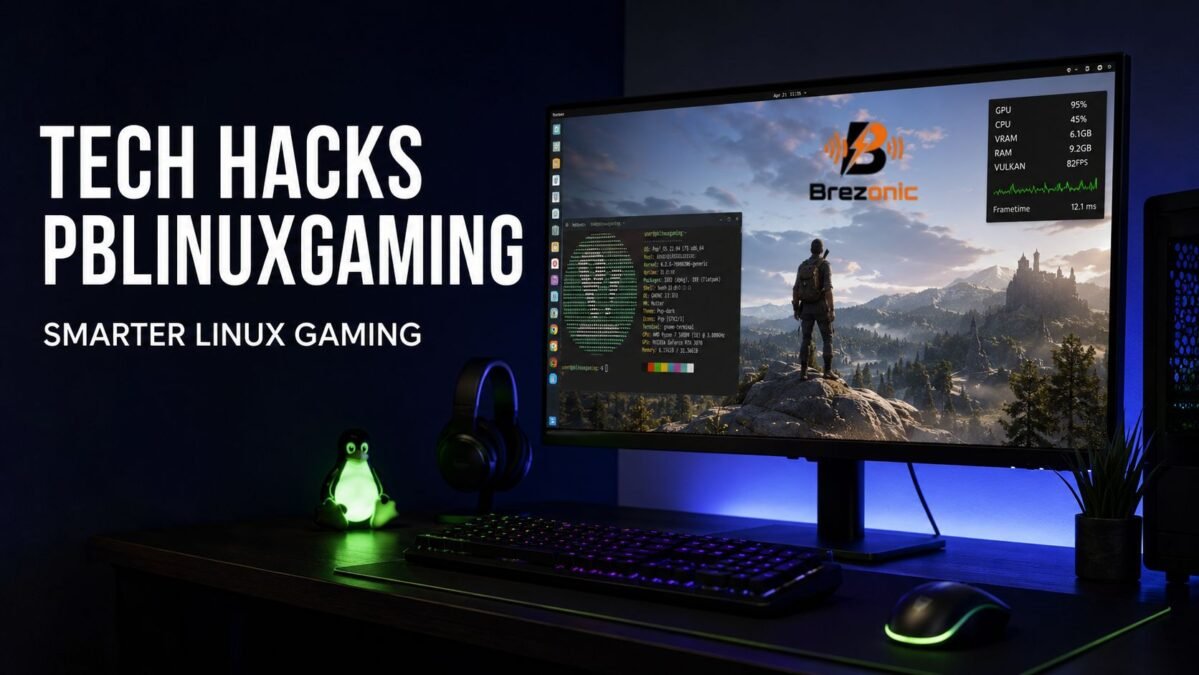
Performance-monitoring overlays can display frame rate, frame time, GPU usage, CPU load, temperature, memory consumption, and other useful information. These statistics help identify the actual bottleneck.
For example:
- High GPU usage may mean the graphics settings are too demanding.
- Low GPU usage with one heavily loaded CPU core may indicate a processor limitation.
- Increasing memory use may point to insufficient RAM or a software problem.
- Sudden temperature increases may cause thermal throttling.
- Uneven frame-time graphs can reveal stuttering that an average FPS number hides.
Monitoring should be used for diagnosis, not as a permanent distraction. Once you find stable settings, turn off unnecessary statistics and enjoy the game.
Use Smarter In-Game Graphics Settings
Maximum graphics settings are not always the best choice. Several demanding effects offer only small visual improvements while significantly reducing performance.
Start by adjusting shadows, reflections, volumetric effects, ambient occlusion, anti-aliasing, and draw distance. Texture quality can often remain high if the graphics card has enough video memory. Resolution scaling technologies can also improve frame rates while preserving reasonable image quality.
A stable 60 FPS usually feels better than a game constantly fluctuating between much higher and lower numbers. Set a realistic frame-rate cap to improve consistency, reduce heat, and prevent unnecessary power consumption.
Keep the System Updated but Not Recklessly
Updates can deliver performance improvements, driver fixes, security patches, and better hardware compatibility. Nevertheless, installing every experimental package as soon as it appears can introduce new problems.
For a dependable gaming system:
- Use trusted software repositories.
- Read update summaries when major components change.
- Keep at least one older kernel available.
- Back up important game saves and configuration files.
- Avoid changing the graphics driver immediately before an important gaming session.
- Test major updates before removing previous working packages.
This balanced approach gives you the benefits of updated software without making the system unnecessarily unstable.
Optimize Gaming on a Linux Laptop
Laptop users must balance performance, heat, noise, and battery life. Make sure the system is using the dedicated GPU for demanding games rather than integrated graphics. Connect the charger when playing, because many laptops reduce CPU and GPU performance on battery power.
Good airflow is also essential. Keep ventilation areas clear, clean dust from the cooling system, and avoid gaming on soft surfaces that block air intake. If temperatures remain high, reducing the frame-rate limit may produce a quieter and more consistent experience.
Common Linux Gaming Mistakes to Avoid
One of the biggest mistakes is applying too many tweaks at once. If performance becomes worse, it can be difficult to identify the responsible change.
Other common mistakes include using random launch commands, copying outdated configurations, disabling essential services, installing conflicting drivers, and assuming that every Windows game will work perfectly. Games with certain anti-cheat systems or specialized launchers may still have limited Linux compatibility.
Back up configuration files before editing them, and always understand what a command does before running it.
Yes, Linux supports a large selection of native and Windows-based games. Steam Play, Proton, Wine, and modern graphics drivers have significantly improved compatibility and performance.
Performance depends on the game and hardware. Some titles run slightly slower, while others perform close to or occasionally better than their Windows versions.
A popular, well-supported distribution with simple driver installation is generally the safest choice. The best option depends on your hardware and previous Linux experience.
Final Thoughts
Tech Hacks PBLinuxGaming is about creating a Linux gaming setup that is efficient, organized, and suitable for your hardware. The best results usually come from correct graphics drivers, a stable distribution, carefully selected Proton versions, sensible graphics settings, and accurate performance monitoring.
Linux gaming does not require endless technical adjustments. Once your system is configured properly, most supported games can be launched and enjoyed with minimal effort. Make changes gradually, keep working configurations backed up, and prioritize stability over unnecessary experimentation. With the right strategy, Linux can provide a fast, customizable, and rewarding gaming experience.